
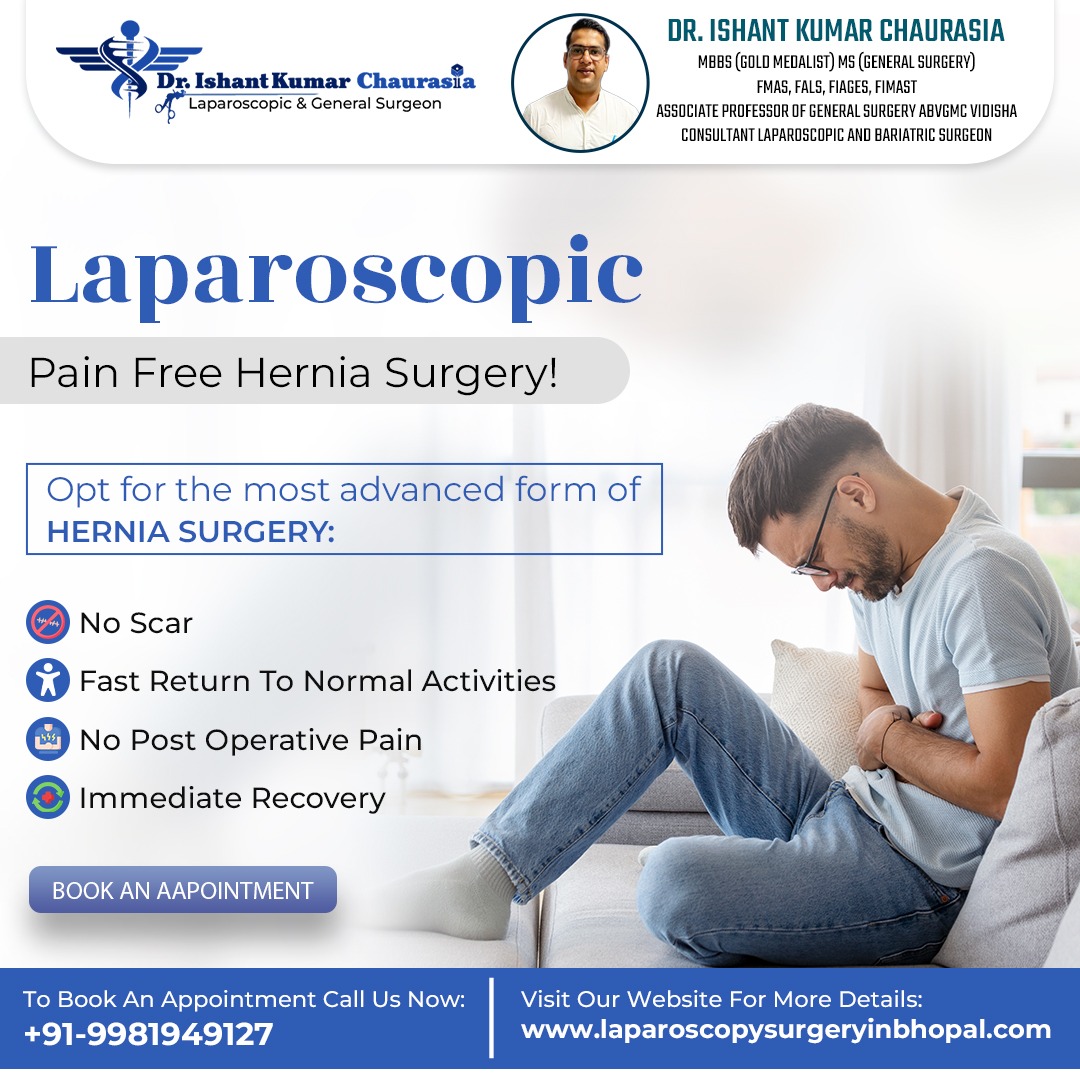
You’ve been dealing with stomach pain for weeks. Maybe your doctor has mentioned a hernia, gallstones, appendix problem, or another condition that may need surgery. Then comes the obvious question: “Do I really need surgery, and why should I see a laparoscopic surgeon?”
That’s where a specialist can make the situation much clearer.
Laparoscopic surgery is a method of performing certain operations through small cuts rather than one large opening. A tiny camera helps the surgeon see inside the abdomen, while special instruments are used to complete the procedure.
Common problems treated with laparoscopic techniques include gallstones, hernias, appendicitis, some intestinal conditions, and several other abdominal problems.
But here’s something patients often misunderstand: laparoscopic surgery is not automatically the right choice for everyone. The type of surgery depends on your condition, medical history, test results, and overall health.
You don’t necessarily need to wait until the pain becomes unbearable.
Consider consulting a surgeon if you have recurring abdominal pain, a noticeable lump around the abdomen or groin, repeated vomiting, suspected gallstones, appendicitis, or a hernia that is becoming uncomfortable.
Your physician may also refer you after an ultrasound, CT scan, or other test suggests that surgery could be useful.
One mistake we regularly see is people treating the symptom repeatedly without finding its cause.
For example, a patient with a hernia may keep avoiding heavy activity because it causes discomfort. The pain may come and go, but the underlying weakness in the abdominal wall remains.
Getting evaluated early can help you understand whether observation, medication, lifestyle changes, or surgery makes sense.
For suitable patients, laparoscopic procedures usually involve smaller incisions than traditional open surgery. This can mean less tissue damage and, depending on the operation, potentially less pain and a quicker return to normal activities.
For example, patients undergoing laparoscopic gallbladder surgery often return to routine activities sooner than they would after a larger open procedure.
One real-world situation we have seen involves a working adult who kept postponing treatment for a painful hernia because they were worried about a long recovery. After proper evaluation, the surgical approach and recovery expectations were explained clearly, allowing the patient to plan treatment around work rather than continuing to live with the problem.
When searching for the Best laparoscopic surgeon in Sitamau, don’t simply choose based on a title or a flashy advertisement.
Look at the surgeon’s experience with the procedure you may actually need. Ask what treatment options are available, whether laparoscopic surgery is appropriate for you, what the expected recovery looks like, and what risks you should understand beforehand.
Patients sometimes assume that laparoscopic surgery is automatically safer because the incisions are smaller.
That’s not the right way to judge it.
The quality of the decision matters more than the size of the incision. A good surgeon should first determine whether surgery is necessary and whether a laparoscopic approach is suitable for your particular condition.
Before agreeing to surgery, ask simple questions:
What exactly is causing my problem?
Do I definitely need surgery?
Can my condition be treated without surgery?
Is laparoscopic surgery suitable for me?
What will recovery look like?
What warning signs should I watch for afterward?
A good consultation should leave you informed, not rushed.
Dr. Ishant Kumar Chaurasia is a surgical specialist associated with the evaluation and treatment of conditions that may require surgical care. Patients considering laparoscopic treatment can discuss their symptoms, diagnosis, available treatment options, and whether a minimally invasive approach is appropriate for their individual situation.
Some discomfort after surgery is normal, but laparoscopic procedures generally use smaller incisions than traditional open surgery. Your surgeon can explain what pain control and recovery may look like for your specific procedure.
If you have a condition such as a hernia, gallstones, appendicitis, or another abdominal problem that may require surgery, a consultation can help determine whether surgery is necessary and which approach is appropriate.
Recovery varies considerably depending on the operation, your health, and whether there are complications. Your surgeon should give you procedure-specific instructions rather than a generic timeline.
If persistent abdominal symptoms, a lump, or a diagnosed surgical condition is affecting your daily life, don’t keep guessing about what comes next. Schedule a consultation and discuss your diagnosis, treatment choices, and whether laparoscopic surgery is appropriate for you.
| Tags: | #Best Laparoscopic Surgeon in Bhawani Mandi, # Best Laparoscopic Surgeon in Jawra, # Best Laparoscopic Surgeon in Daloda, # Best Laparoscopic Surgeon in Piplia Mandi |


